

Heading Styles
Choose from a variety of styles to create the perfect look for your curtains.

Wavefold (or S-Wave)
The wavefold heading is the modern heading style for drapes. A tape with equally spaced carriers is sewn to the back of the curtain fabric and snapped into the runners of a specially designed wavefold track.
The wavefold heading is best suited to sheers and lightweight curtains. While the wavefold can be used with heavier fabrics and separately lined drapes it tends not to be a popular choice in those applications as the wavefold curtain track is generally not suited to cord operated rods and tracks.
Motorised and hand operated tracks are best suited to this style of curtain.
A wavefold heading tape is available in a 1.8x fullness and a 2x fullness.

Inverted Pleat
Inverted pleat curtains have a fixed-space, sewn-in pleat that is evenly spaced across the width of the drape. The spacing, depth and number of pleats is determined by fabric width, window width and the fullness of the curtain required by the decorator.
An inverted pleat has a simple but elegant, flat line and minimalistic look. An inverted pleat looks equally at home with a modern sheer fabric or with a lightweight plain or simple patterned drape.
It tends not to pleat overly well with heavier fabrics and separately lined drapes.
An inverted pleat curtain generally has around 2x fullness and operates equally as well on a traditional curtain track or a modern rod.
Pinch Pleats


Double
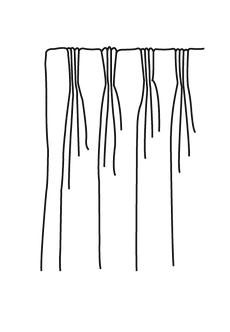
Triple
Pinch pleat headings have a fixed-space, sewn-in pleat that is evenly spaced across the width of the drape. The spacing, depth and number of pleats is determined by fabric width, window width and the fullness of the curtain required by the decorator.
The pinch pleat heading is our most popular heading by far. Being a sewn-in pleat it holds its shape and position for ever and a day, always looking in perfect symmetry. A triple pinch pleat curtain usually has around 2.5 x fullness, a double pinch pleat usually has around 2 x fullness whereas the single pinch pleat has around 1.5 x fullness.
A triple pinch pleat generally looks best with a simple pattern or rich plain texture whereas the double pinch pleat can show a busy pattern or a heavy fabric to its best advantage. The single pinch pleat is generally used where a fully pleated curtain is not required such as nursing homes, offices and rental properties as far less fabric is required in these applications..
Pinch pleat headed curtains must be measured accurately as there is generally no allowance for width adjustment if things go wrong.
Single

Pencil Pleat
Pencil pleats comprises of small pencil-sized pleats that create a tightly gathered header. It is a simple option that uses a heading tape to allow you to gather the fabric to your desired fullness via the tightening of pull cords. Due to the fullness that can be achieved by this heading style we recommend avoiding very heavy or bulky fabrics, as these can disrupt the even distribution of the gathering.

Rod Pocket
The rod pocket heading is generally used in fixed lightweight curtain applications such as café curtains, fixed position sheers and valances. A rod pocket heading can only be used with a curtain or valance that is fitted onto a round rod and is not suitable for curtains that need to be drawn on a regular basis.